Living Wall & Green Facade Maintenance
Survey, irrigation repair and replanting for living walls and green facades, reached by rope access where no scaffold or platform fits.
Living Wall & Green Facade Maintenance
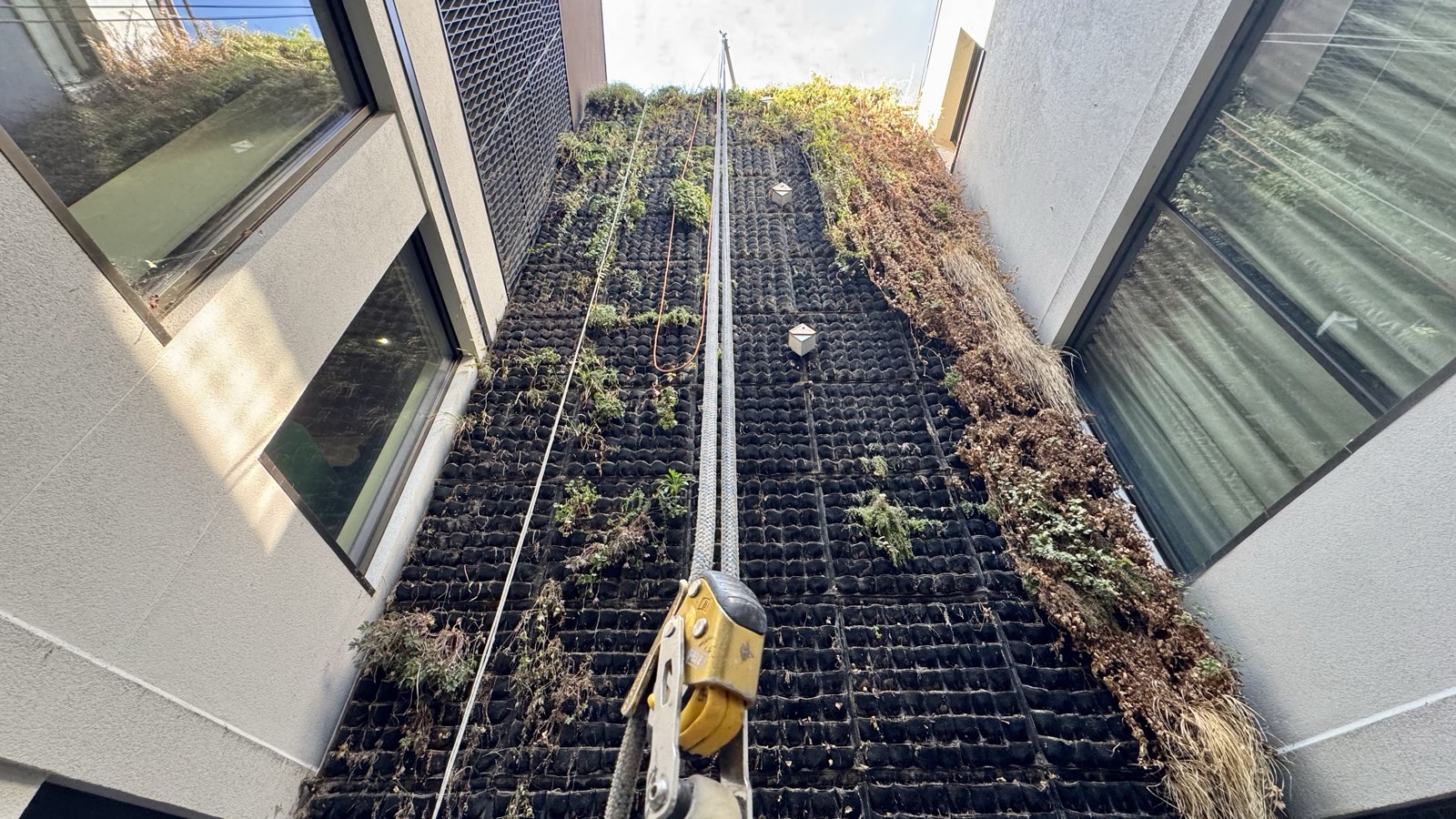
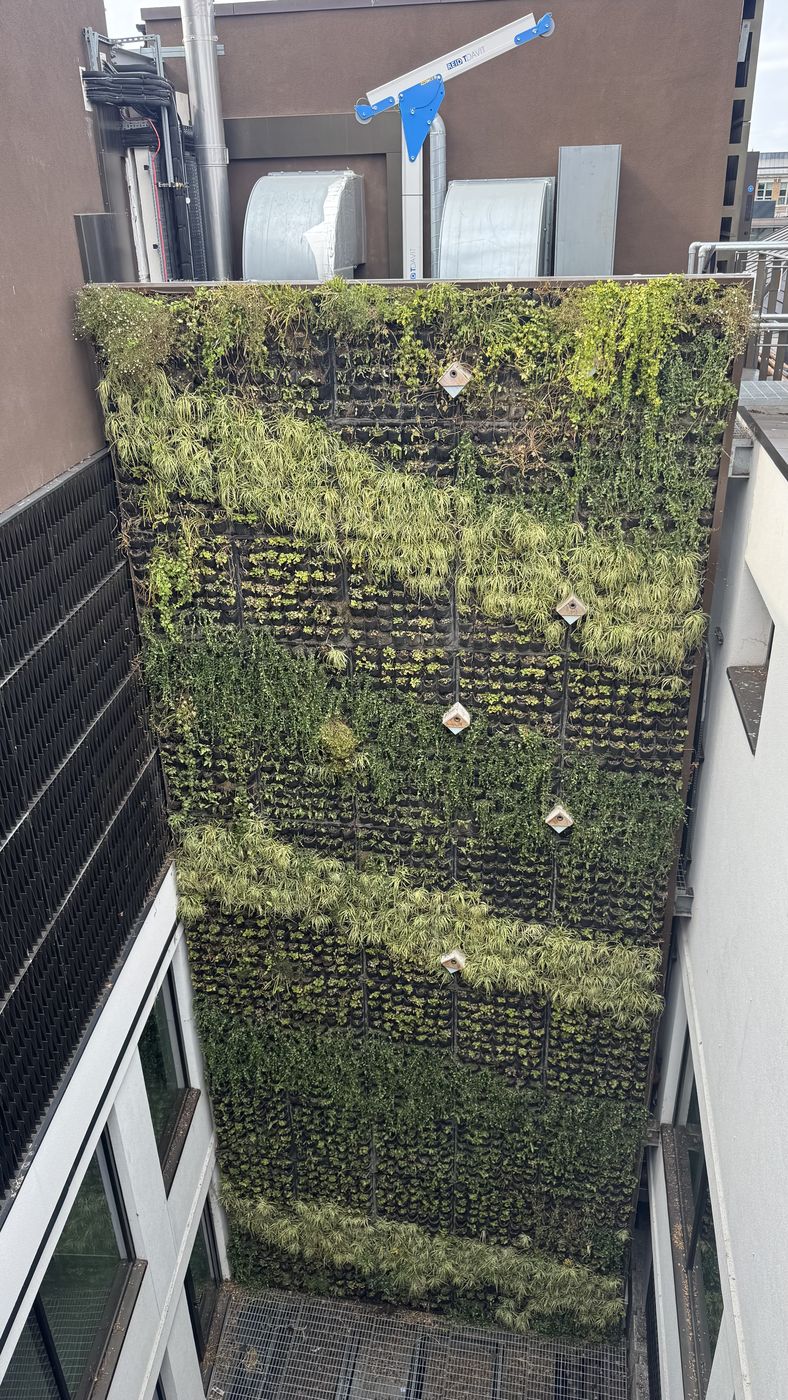
A living wall is a garden that happens to be vertical, and like any garden it dies without water and attention. The difference is that nobody can reach it. Most failed walls we are called to were not badly built: they were installed, admired, and then left four storeys up where no gardener could get to them.
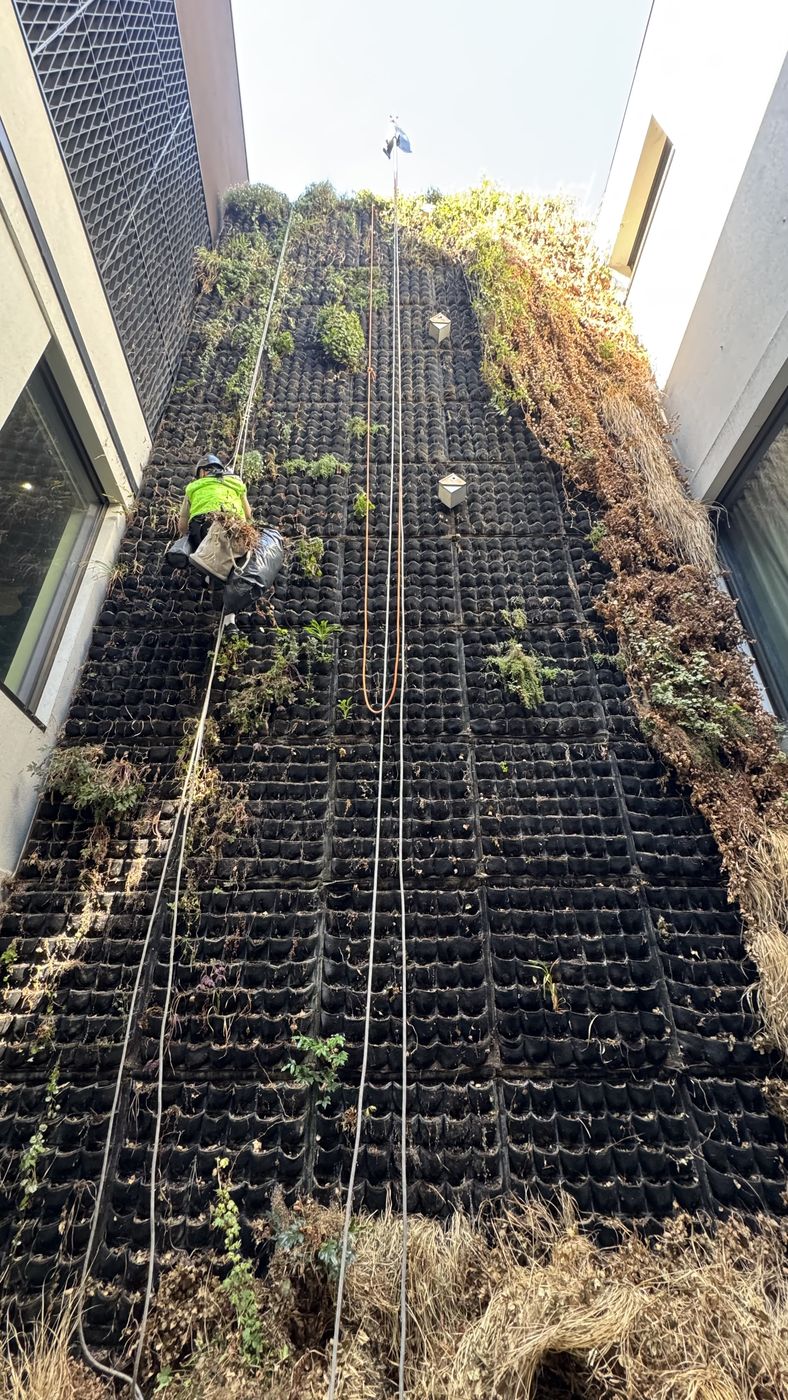
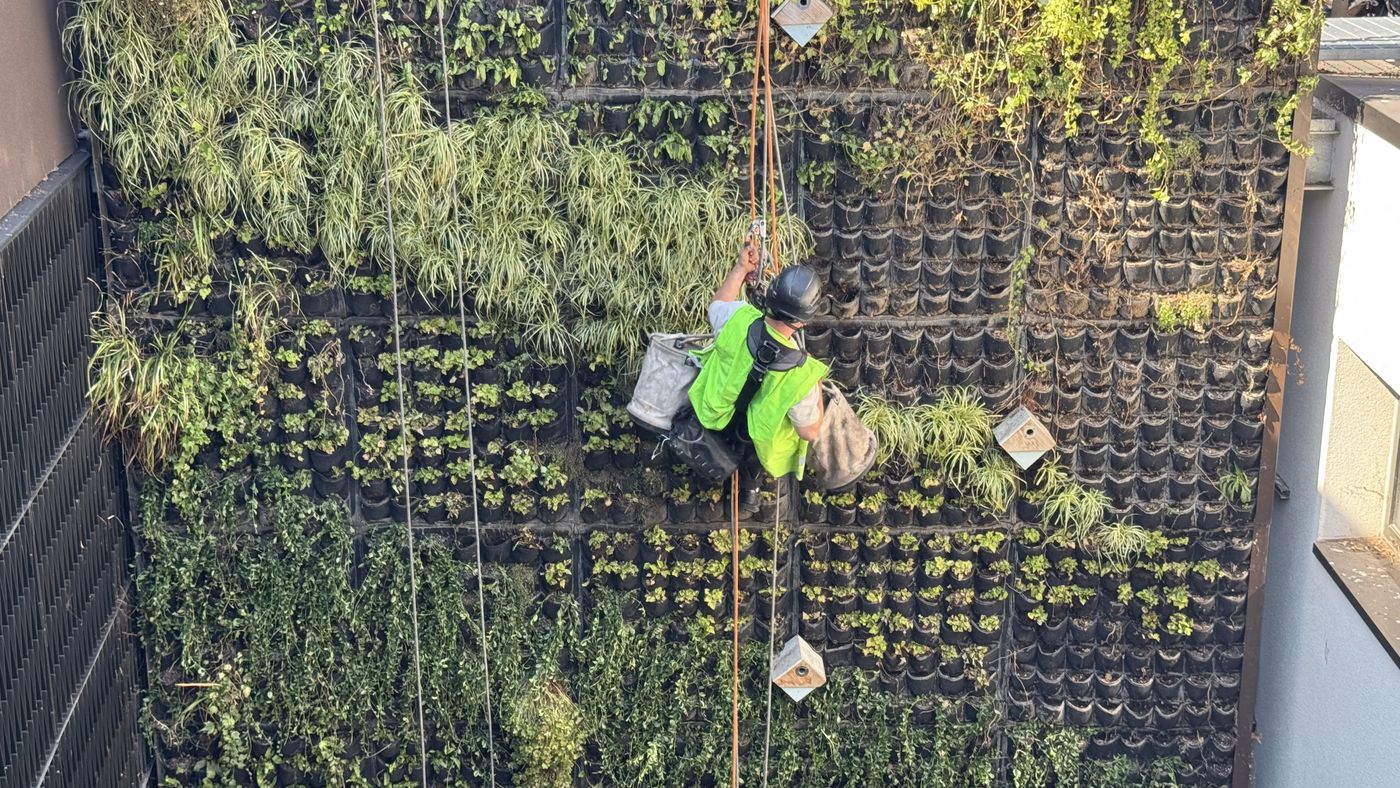
We maintain living walls by rope access, which means the whole elevation is reachable without a scaffold, a cherry picker, or closing the courtyard below.
Why living walls fail
- Irrigation failure. A blocked dripper or a failed pump kills a zone in a fortnight during summer.
- Uneven watering. The top dries out first while the base stays saturated, so the wall dies from the top down.
- No access. Nobody inspects what nobody can reach, so a small fault becomes a bare panel.
- Wrong planting for the aspect. A north-facing lightwell and a south elevation need different species.
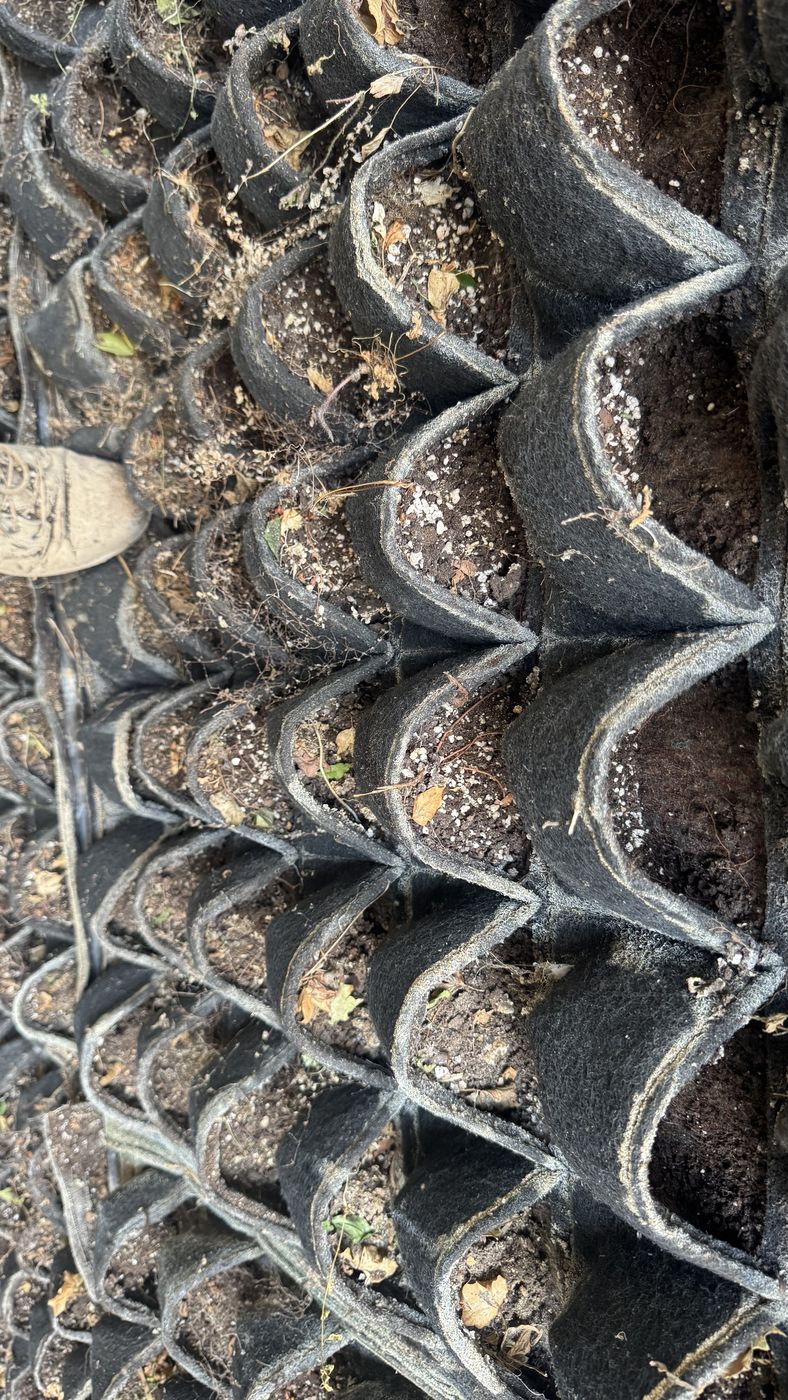
- Nutrient exhaustion. The growing medium in a modular system is shallow and runs out.
What we do
- Condition survey on ropes. Panel by panel, photographed, with the dead zones mapped.
- Irrigation check. Test every line and dripper, flush blockages, verify coverage top to bottom.
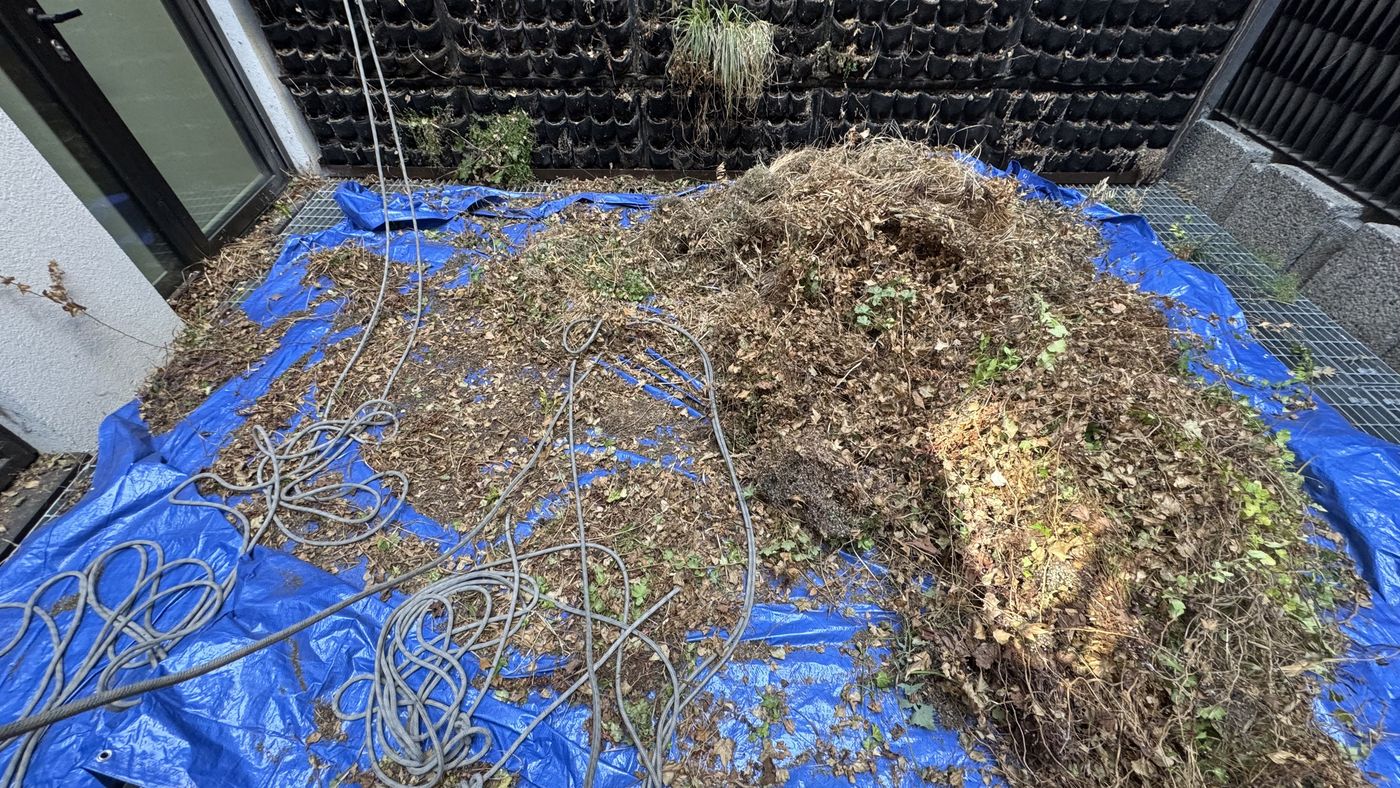
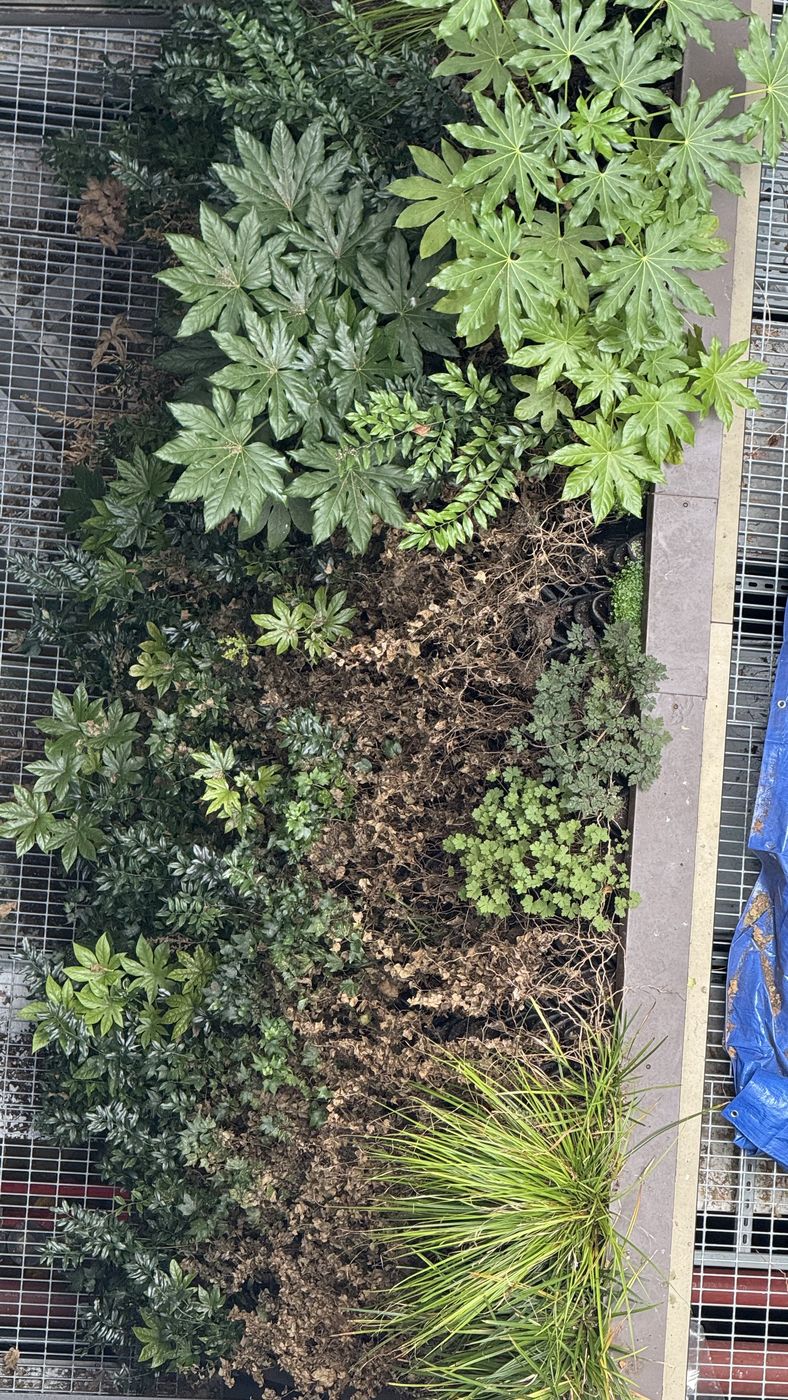
- Replanting. Replace dead stock with species suited to that aspect and exposure.
- Feeding and pruning. Top up the medium, feed, cut back growth away from windows and vents.
- Photographic report. What we found, what we changed, what to watch.
Planned maintenance beats rescue
Bringing a dead wall back costs several times what keeping it alive costs, because it means new stock, not just water. Two or three visits a year, timed around the growing season, is the difference between a wall that looks intentional and one that looks abandoned.
Related services
Frequently asked questions
Can a dead living wall be saved? Usually yes. If the irrigation and the structure are sound, it is a replanting job rather than a rebuild. We survey first and tell you which one you are looking at.
How often does a living wall need maintenance? Two to three visits a year for most London walls, plus an irrigation check before summer. Neglect is what kills them, not the climate.
Do you need a scaffold? No. We work from the roof on ropes, which is what makes narrow lightwells and courtyards viable at all.
Project Gallery
Frequently Asked Questions
Request a Quote
Receive a tailored proposal for your project with no obligation.
Get a Free Quote WhatsAppOur Guarantees
Need a rope access service?
Get in touch today and receive a free quote. Our team of specialists is ready to deliver your project with safety and efficiency.