Forty-one findings on a clock tower, including one nobody could see from the ground
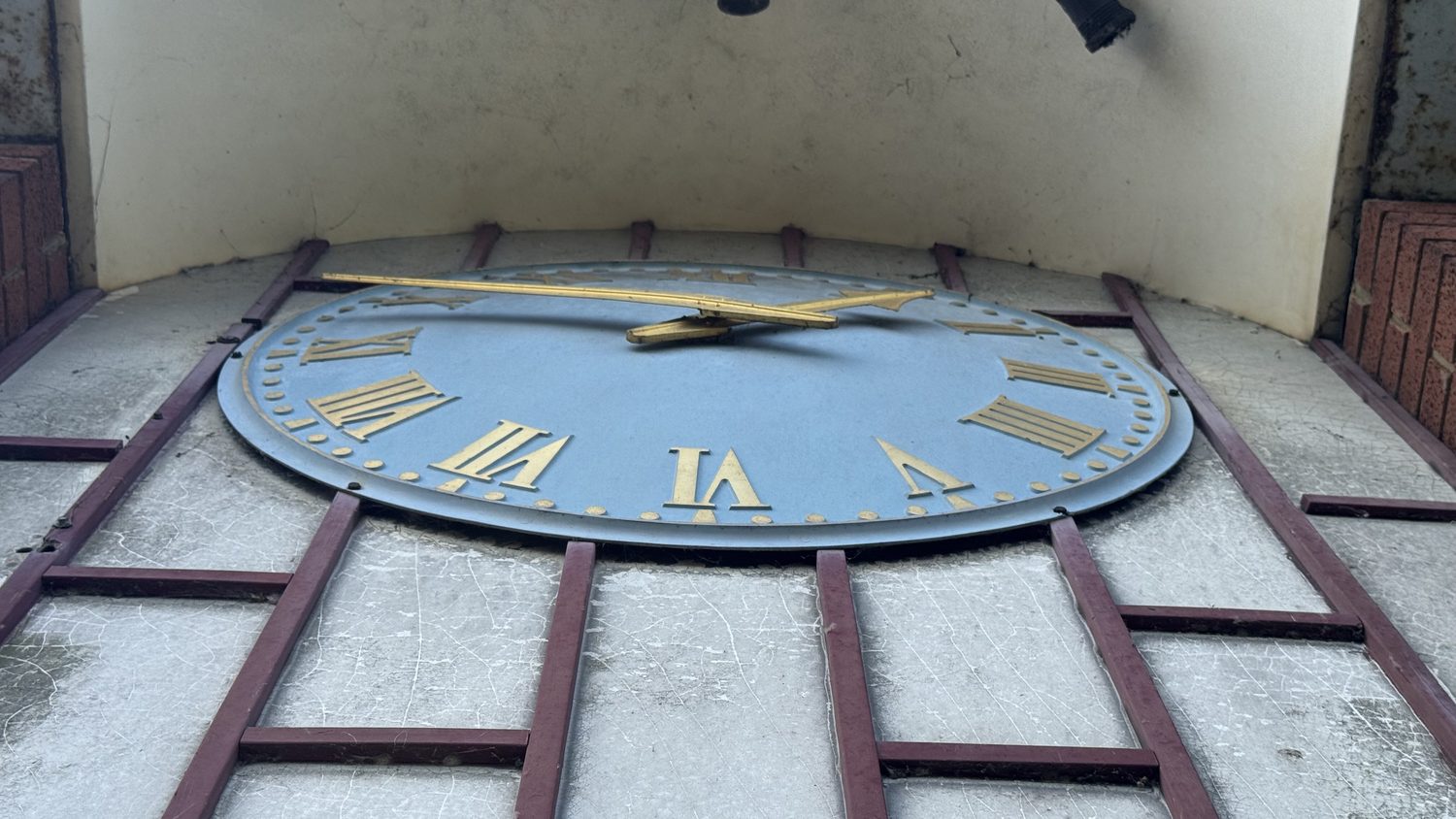
Project summary. Trinity Business Park, Chingford, London E4, for First National Services. A steel structure inspection carried out by rope access on 30 May 2026, covering all four elevations of the site in a single visit: the clock tower and its entrance steelwork, the perimeter canopy and sign gantry, the fascia and soffit assemblies, and the decorative hub nodes and roofline steel. Forty-one findings were recorded and photographed. Twenty-seven were rated high severity. The most consequential one could not be seen from the ground at all.
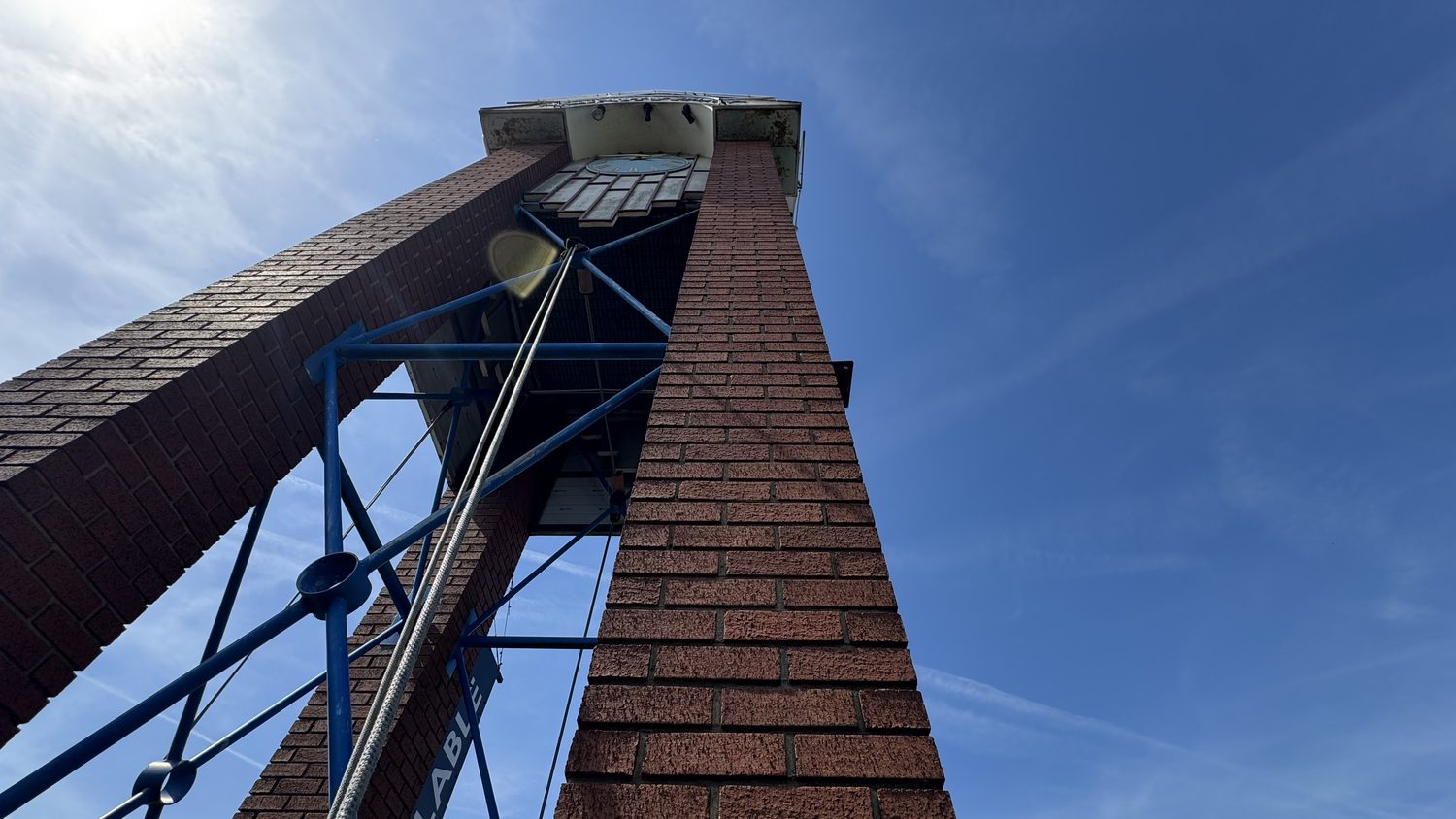
The brief: four elevations, one visit
The instruction was a condition inspection of the site's structural and decorative steelwork. That covered rather more than the tower: canopy and entrance steelwork to the north, perimeter canopy and sign gantry steelwork to the south, fascia and soffit assemblies to the east, and decorative hub node assemblies, canopy fascia panels and roofline steelwork to the west.
Two technicians attended, supervised at IRATA Level 3, working to the IRATA International Code of Practice and BS 7985. A site-specific risk assessment and method statement were signed off before any rope was deployed, and a ground exclusion zone was maintained around the tower base throughout.
Getting to the top of a clock tower
A clock tower of this kind has no permanent access. There is no internal ladder to the top and nowhere to stand a machine that reaches all four faces.
The top was reached by aid climbing. From there, working ropes were passed through the structure and run down to a weight trolley at the base, which gave a controlled descent system that could then be applied to each of the four faces in turn.
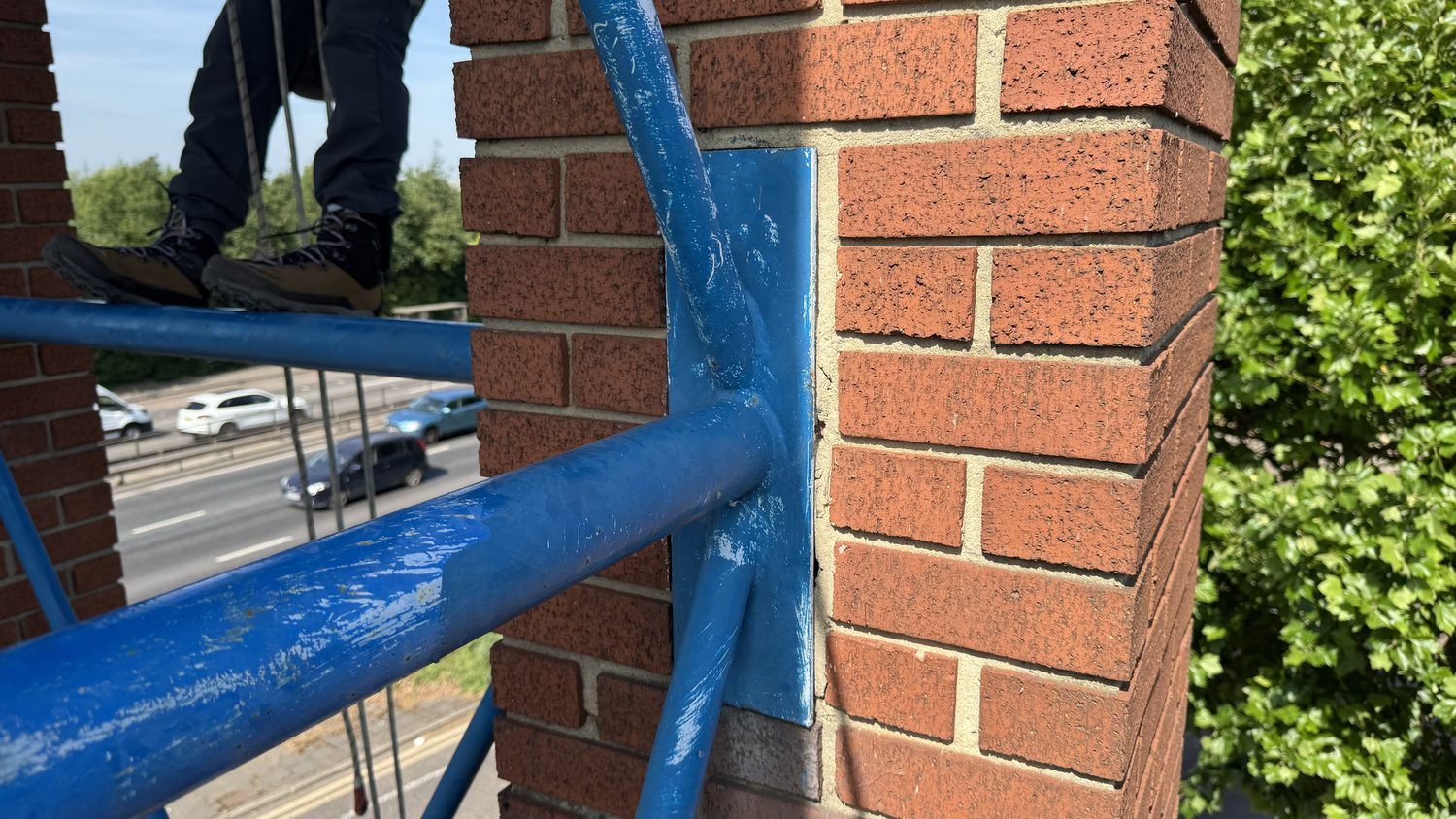
That detail matters more than it sounds. It means every face of the tower received the same close-range treatment, in sequence, rather than the inspection being shaped by whatever a platform happened to reach. Access that dictates coverage produces a report full of gaps, and the gaps are never where you would like them to be.
What close range found that the ground could not
A structural channel behind the cladding line
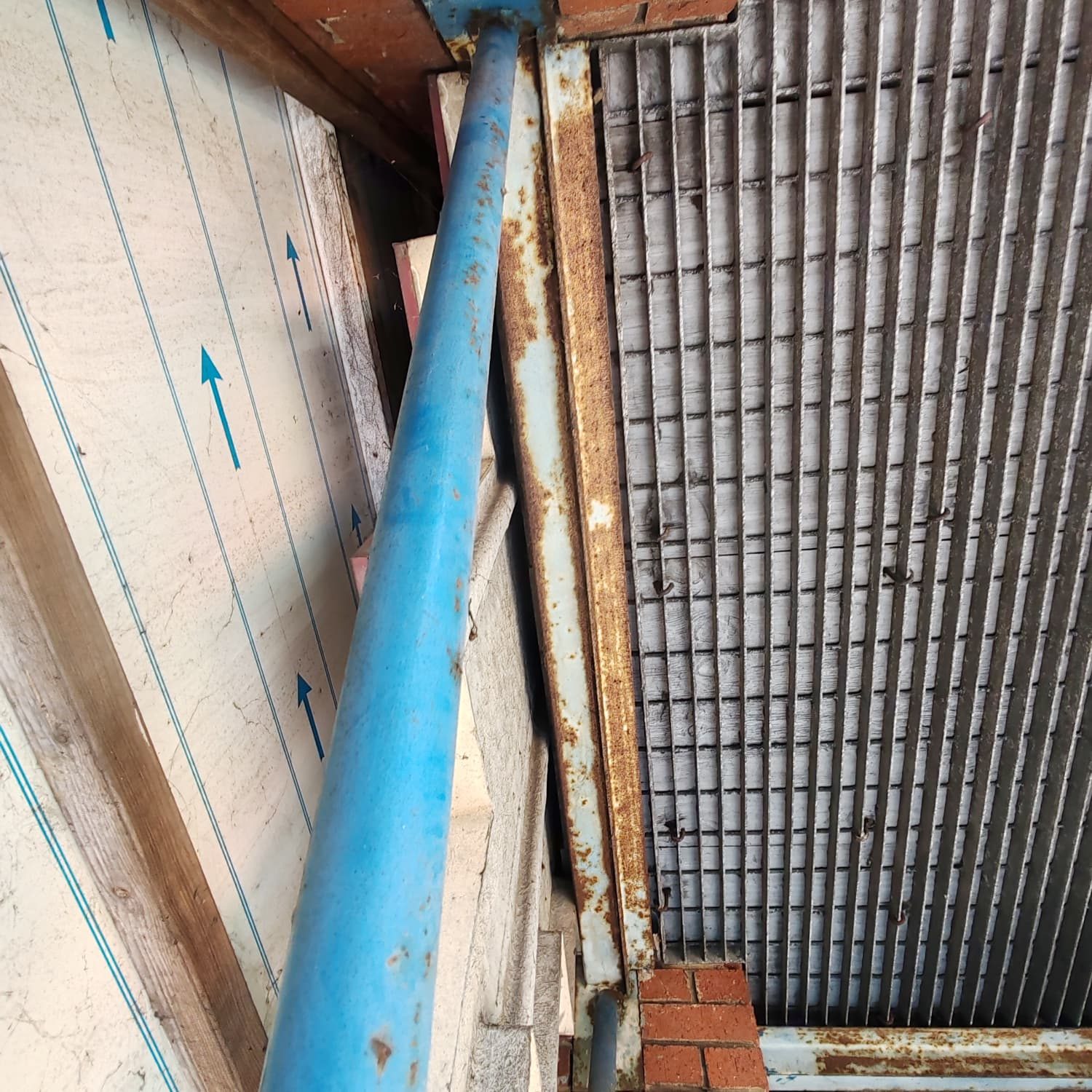
On the east elevation, a steel channel runs behind the cladding line. It is not visible from the ground, and it is not visible to a camera flown past the building either, because the cladding is in the way. From a rope position at the cladding line it was possible to look along it.
It was heavily corroded along its full length, with advanced corrosion at a pipe penetration through it.
Corrosion inside the bore of a decorative node
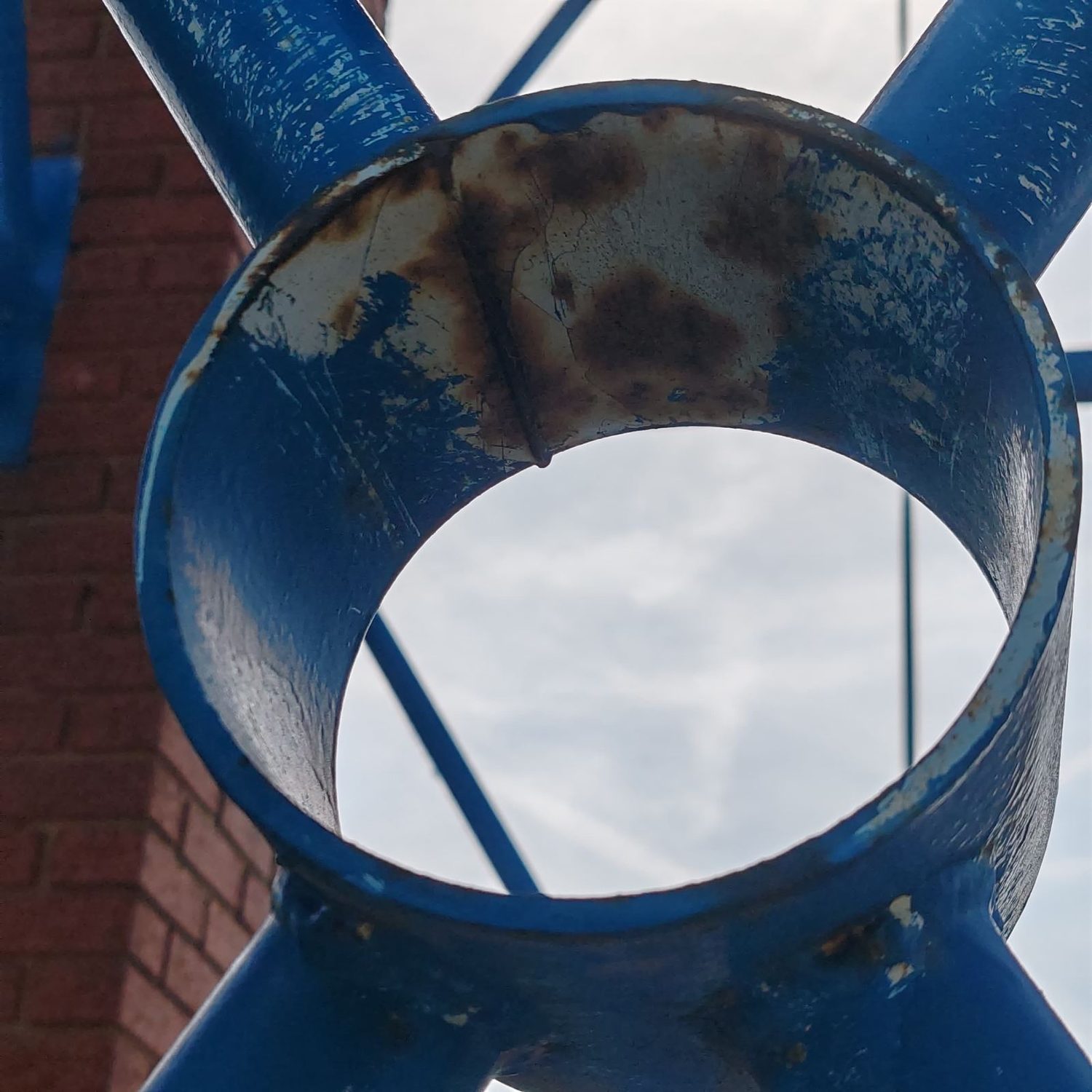
The west elevation carries decorative steel hub nodes, the junctions where several tubular members meet. From below they read as sound blue-painted steel. At arm's length, corrosion was penetrating the inner bore of the node.
A retention cable held with informal lashing
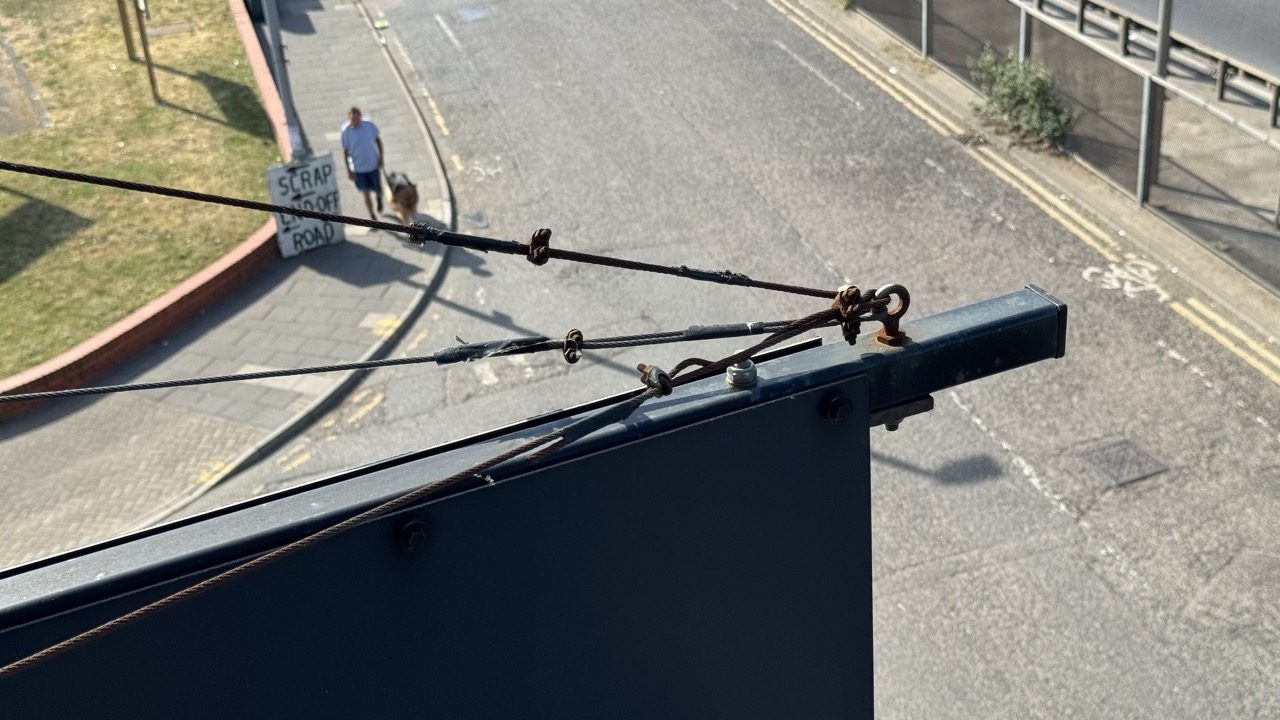
At the south sign gantry, the wire rope retention system showed corrosion on the strands and ferrule fittings, and part of it had been made good with informal lashing.
The report is blunt about this, and deliberately so: informal lashing is not an acceptable substitute for a rated retention system. Corroded retention fittings should be assessed by a competent person and replaced where section loss or fitting integrity cannot be confirmed.
Forty-one findings, one conclusion
The final count was 41 findings: 27 rated high, 13 medium and 1 low, each with a target window of three or six months depending on severity.
A long list of defects is easy to produce and not very useful on its own. What mattered here was the pattern. The same failure appeared on all four elevations: total loss of the protective coating, active rust, scale and delamination, on canopy soffit beam flanges, cornice capping steels, sign gantry fascia plates, fascia soffit panels and roofline steelwork alike.
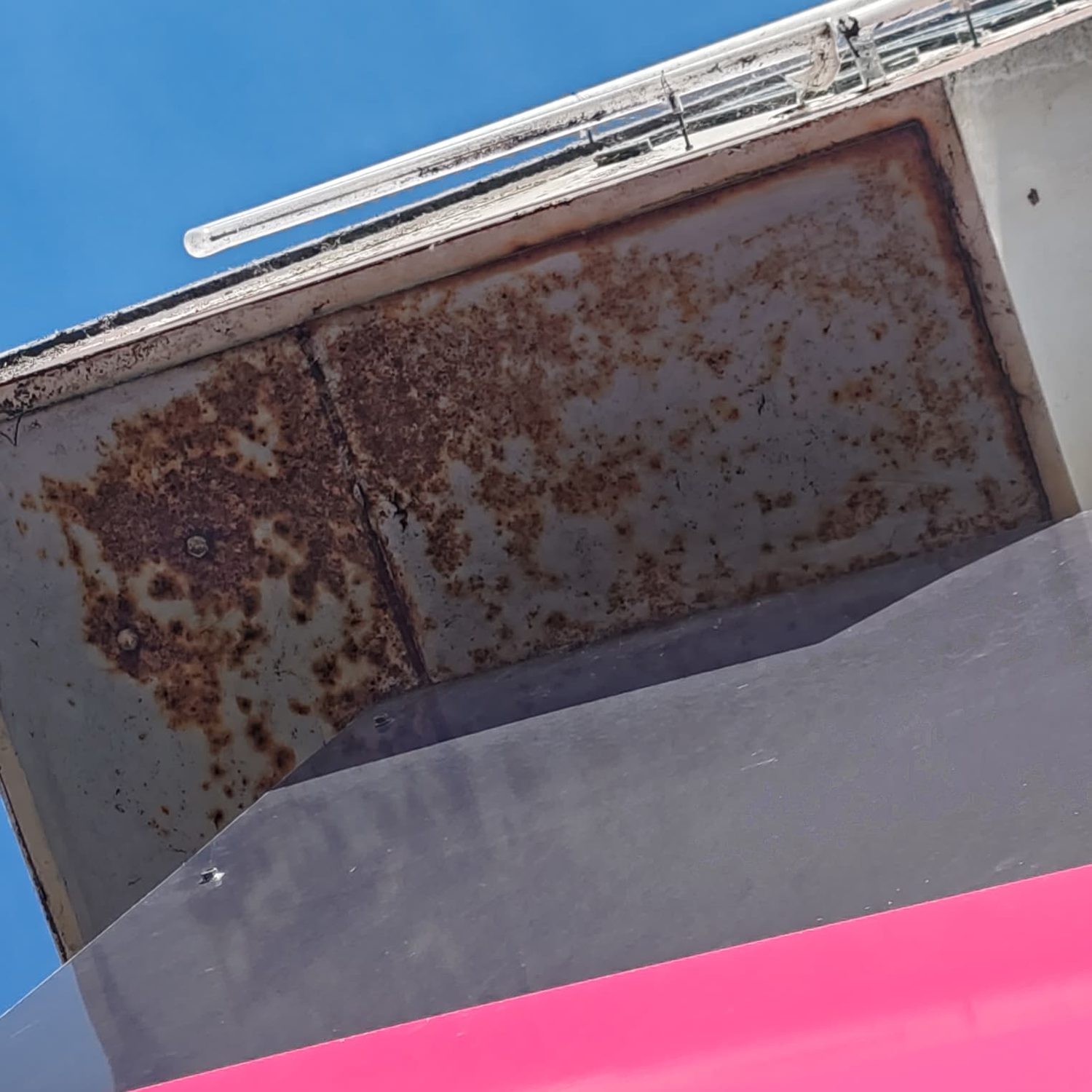
Read together, that is not forty-one separate repairs. It is one conclusion: the existing coating system has reached the end of its serviceable life across the whole site. So the recommendation was a single remediation programme, with surface preparation to the appropriate standard followed by a zinc-rich primer and a compatible two-coat system, rather than localised touch-in that would fail alongside everything around it.
The masonry was written up as a concurrent package rather than a separate job: open perpend joints, cracked bed joints and a void at the tower pier base. Water tracking through the masonry envelope will keep corroding the steel next to it, so recoating the steel while leaving the joints open buys a repeat of the same inspection in a few years.
What the report actually contains
Each of the 41 findings carries the component it relates to, a description of the defect, a severity rating, a target window, a recommended action, and a photograph with the defect pinned on the image.
The pinning is the part that makes it usable. "Corrosion to canopy steelwork" cannot be priced or ordered. A pinned photograph of one specific beam flange, with the preparation standard and coating system named against it, can be handed to a contractor and turned into a quotation.
One thing the report is careful not to claim: where section loss was suspected, it recommends that section thickness be checked. It does not state what the remaining thickness is. A close visual inspection tells you where to measure. It does not measure.
Arranging a structural steel inspection
If you look after a site with structural or decorative steelwork that nobody has been close to in years, the useful question is not whether it looks rusty from the car park. It is what is happening behind the cladding, inside the nodes and at the fixings, because that is where the condition of a coating system is actually decided.
We carry out steel structure inspections by rope access across London and the surrounding areas, and issue the report in the format described above. Send the site postcode and roughly what is up there, and we will tell you what access it needs.
Related: steel structure inspections, building inspections and structural safety, and protective coatings.
Need this done on a London building?
IRATA rope access teams, fixed prices, no scaffold. Reply within 24 working hours.