How Blocked Gutters Cause Wet Walls

How Blocked Gutters Cause Wet Walls
Gutters exist for one purpose: to collect rainwater from the roof and channel it safely to the drains. When gutters become blocked, water has nowhere to go except over the edge and down the building facade. The consequences for the property below can be severe and expensive.
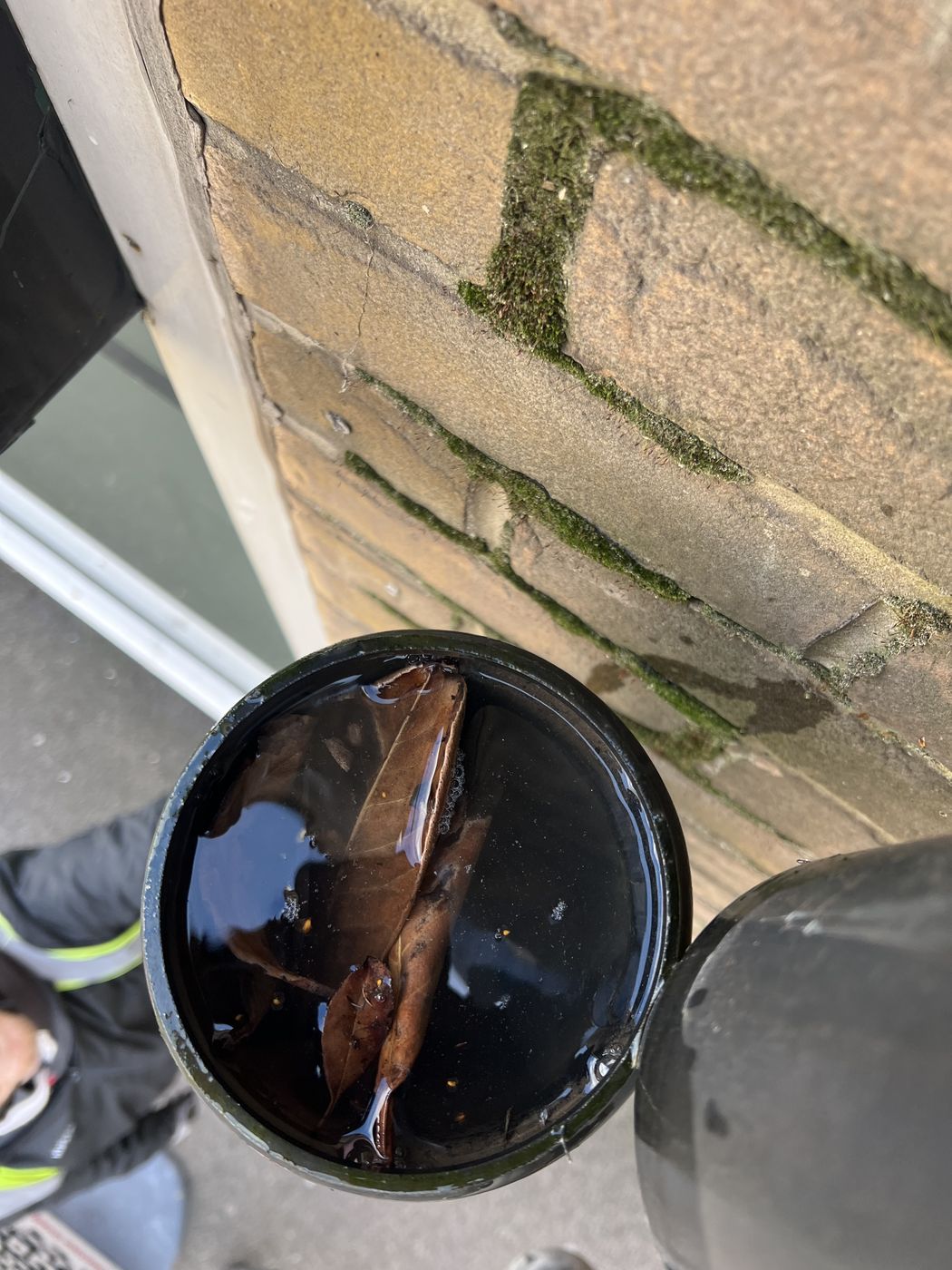
What Causes Gutter Blockages
The most common cause is the accumulation of leaves, moss, and debris washed from the roof surface. Bird nests, windblown litter, and mortar fragments from deteriorating pointing also contribute. In many London buildings, gutters are at a height that makes routine inspection impractical without specialist access, so blockages go unnoticed until problems develop.
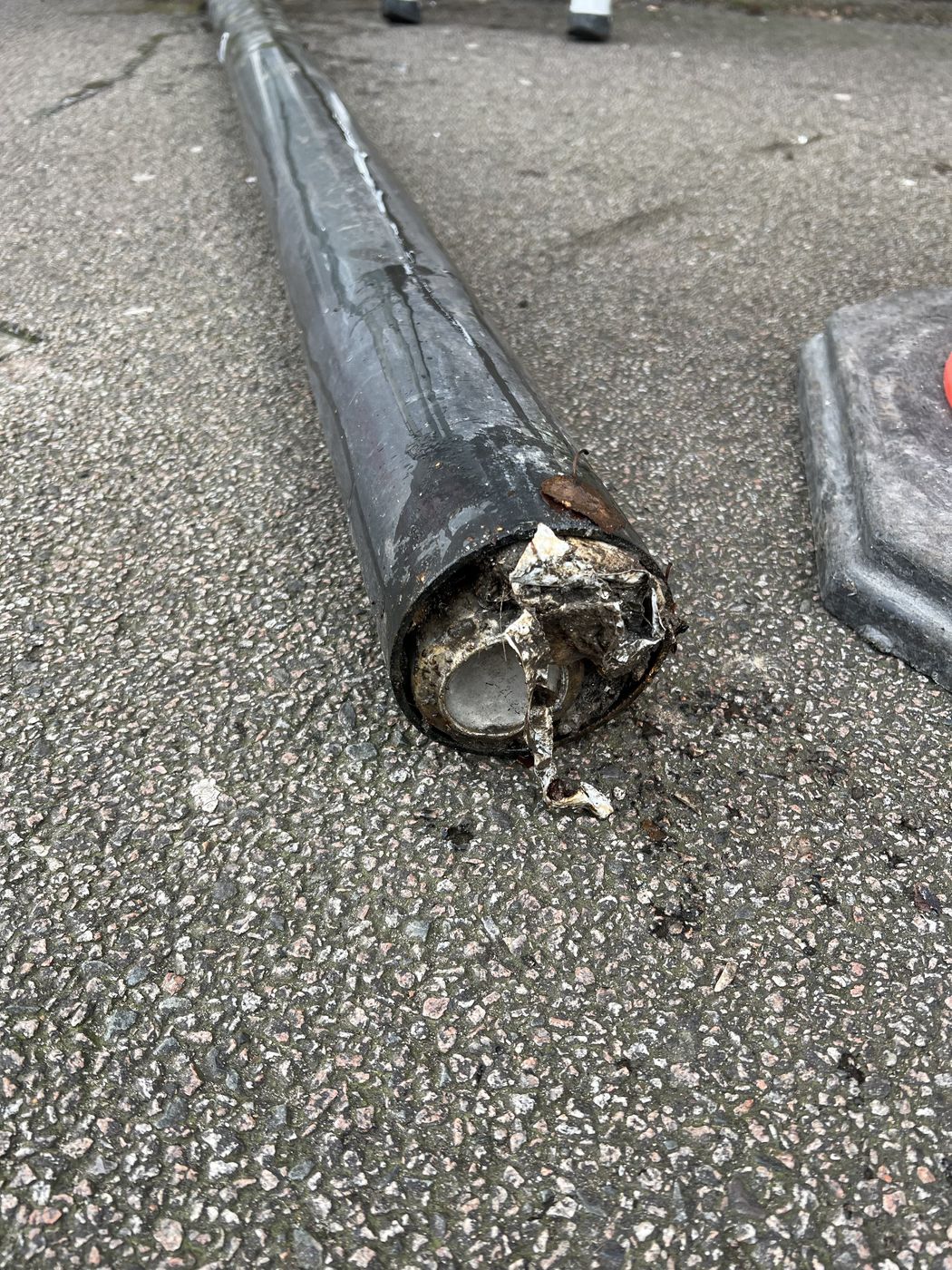
How Overflow Leads to Wet Walls
When a gutter overflows, water cascades down the external wall face. Unlike brief rainfall that the wall surface can usually repel, the concentrated flow from an overflowing gutter delivers far more water than the masonry can shed. The wall surface becomes saturated and moisture migrates through to the internal plaster.
The Saturation Cycle
Once masonry is saturated, it takes a long time to dry. In the UK climate, where rainfall is frequent and humidity is high, a wall that is receiving regular overflow from a blocked gutter may never fully dry between rainfall events. This creates a permanent damp condition internally, often misdiagnosed as condensation.
Hopper Heads and Internal Downpipes
Many Victorian and Edwardian London buildings use hopper heads to collect water from multiple gutter runs before feeding a single downpipe. These hoppers are particularly vulnerable to blockage because they collect debris from a large area. When a hopper blocks, the overflow can be significant and affect multiple floors as water cascades down the building. Learn about gutter and hopper repairs and maintenance options.
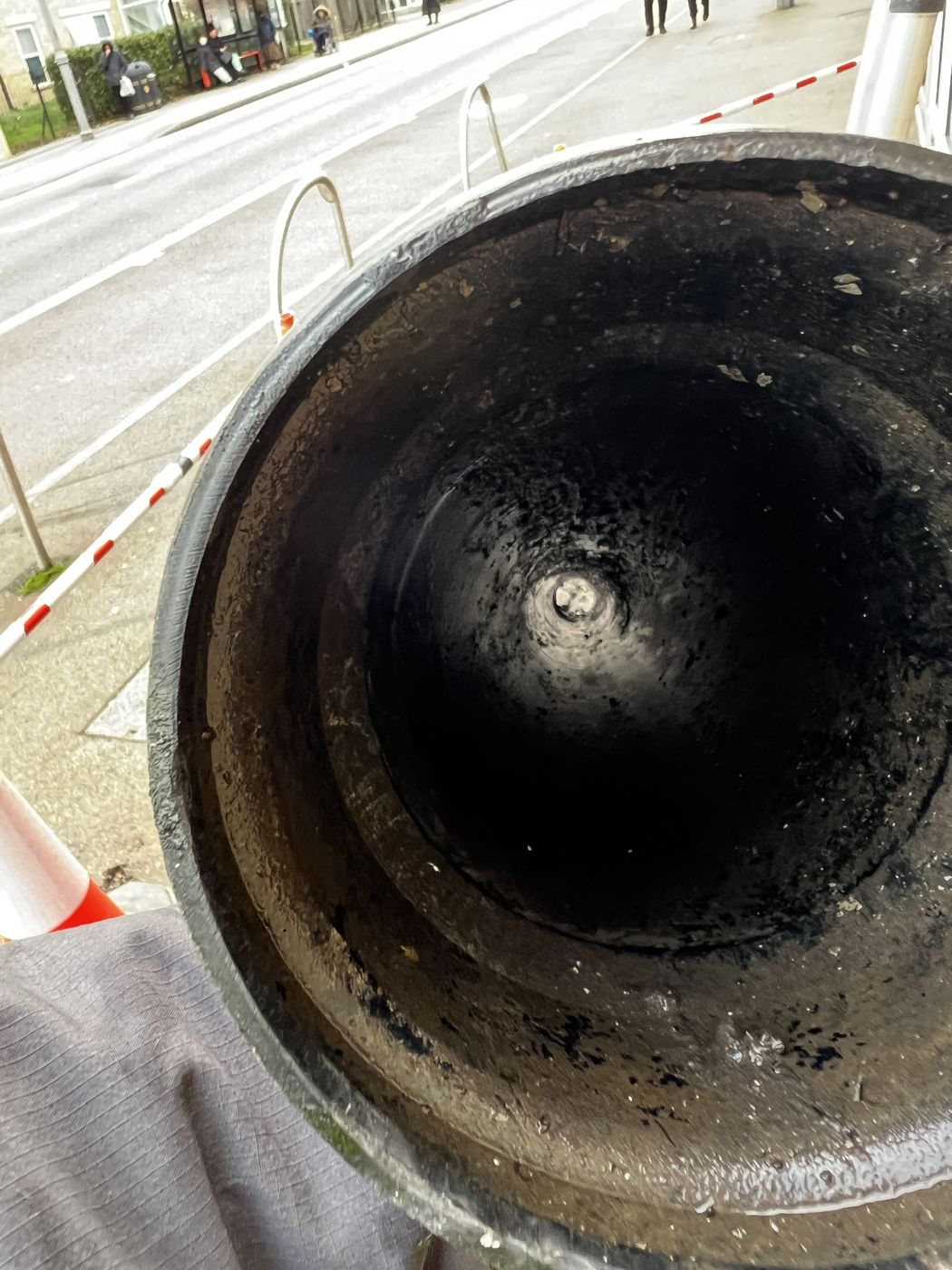
Damage Beyond Damp
Prolonged wall saturation from gutter overflow does not just cause damp patches. It can accelerate mortar erosion, cause frost damage to brickwork, rot embedded timber, stain the facade permanently, and in severe cases contribute to structural deterioration. The cost of addressing these secondary problems far exceeds the cost of regular gutter maintenance.
Prevention for Landlords
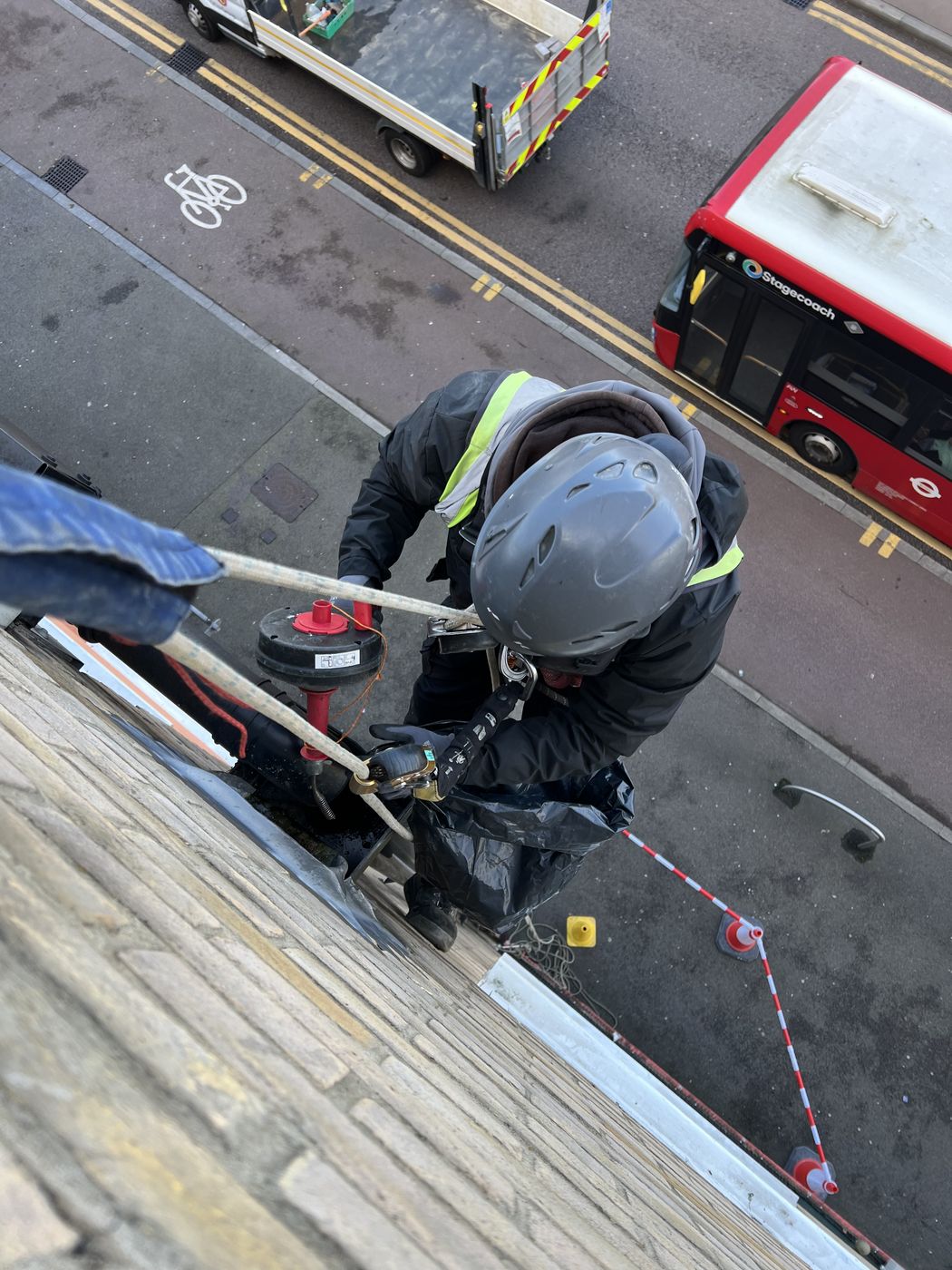
Annual gutter clearing is one of the simplest and most cost-effective maintenance tasks a landlord can commission. For high-level gutters, rope access provides efficient and affordable access without scaffolding. Combining gutter clearing with an annual visual check of the roof and parapets maximises the value of each access visit.
Acting on the Signs
If tenants report damp on upper floors, check the gutters above as an immediate first step. Green staining or dark marks on the wall below the gutterline are strong indicators of overflow. Resolving the blockage and checking for consequential damage should be a landlord's priority before commissioning any internal redecoration.